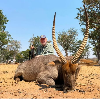
Tom Benavides, Assistant Vice President for Dallas Safari Club, testified before the House Committee on Natural Resources on the importance of hunting to sustainable conservation. Benavides advocated for regulated trade of rhino horn to prevent extinction, stating the U.S. must support legalization rather than maintain decades-long de facto support of the black market.
Conservation
The Wyoming Game and Fish Department will retire the Sage-Grouse Local Working Groups effective January 31, concluding 21 years of conservation work that began in 2004. The groups funded 377 projects and secured over $11 million in sage-grouse conservation actions and $68 million in matching funds. The department will continue sage-grouse management through the Sage-Grouse Implementation Team and partnerships with state and federal agencies.
The Congressional Sportsmen's Foundation (CSF) testified as the only sportsmen's organization at a House Committee on Natural Resources oversight hearing examining the EXPLORE Act's first-year impacts on public lands access, shooting ranges, and conservation. Senior Vice President Taylor Schmitz represented hunters, anglers, recreational shooters, and trappers to ensure their priorities were documented in the Congressional Record.
Arkansas Hunters Feeding the Hungry exceeded $1 million in donations from hunting and fishing license buyers through the Arkansas Game and Fish Commission's online licensing system. The organization provides approximately 100,000 pounds of venison annually to food banks statewide, equaling 400,000 servings to needy Arkansans.
Vermont's Nongame Wildlife Fund, supported through state income tax checkoffs, funds conservation efforts for at-risk species including bumblebees, butterflies, mussels, and mammals. The program has successfully recovered species like common loons, ospreys, and peregrine falcons, with donations leveraging matching federal grants to maximize impact.
For 50 years, the Mississippi State University Deer Lab — a partnership between the university’s Forest and Wildlife Research Center and MSU Extension Service — has delivered nationally recognized research on deer biology, habitat management and land stewardship to hunters, landowners and wildlife professionals across the Magnolia State.
The Saiga (antelope) in Kazakhstan has rebounded from dangerously low numbers and has been recognized as a success by the international body governing threatened and endangered wildlife. The Convention on International Trade in Endangered Species of Wild Fauna and Flora (CITES), consisting of 184 countries, has declared that Saiga are now eligible for sustainable use programs in the Republic of Kazakhstan.
Utah’s Watershed Restoration Initiative works to improve and restore high-priority watersheds and habitats throughout the state. During this past fiscal year — between July 1, 2024 and June 30, 2025 — a total of 144,433 acres were improved across Utah through this unique and innovative program.
The Alabama Chapter of the National Wild Turkey Federation (NWTF) recently allocated $389,018 in Hunting Heritage Super Funds and Tag Funds for wild turkey projects in Alabama.
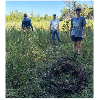
The Green Mountain and Finger Lakes National Forests — home to the first acres managed under the National Wild Turkey Federation’s Forests and Flocks Initiative — invited volunteers to the Burnt Butcher Stewardship Project area this past summer to install tree shelters around newly planted oak seedlings, building off a collaborative NWTF project and engaging people in the life-changing power of the outdoors.
The U.S. Senate passed the Wetlands Conservation and Access Improvement Act, which extends and reauthorizes the interest earned on funds held in the Federal Aid to Wildlife Restoration Fund (Pittman-Robertson) to continue to be available for the North American Wetlands Conservation Act (NAWCA).
Visitors and residents in the northeastern Lower Peninsula may notice more clearcutting of aspen trees over the next year or two as the Michigan Department of Natural Resources speeds up harvests in a 30-square-mile area.
Thanks in part to funding provided by the NWTF through its 2025 investment in wild turkey research, the New Hampshire Fish and Game Department is gearing up to start an innovative wild turkey research project that will investigate wild turkey survival and harvest rates in New Hampshire to produce a more accurate population estimate.
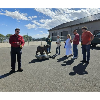
Recently, two members of the NWTF River City Roost Chapter out of Sacramento — Jeff Lomas and Ron Marchio — joined forces with USDA Forest Service recreational staff and interns and NWTF staff for a cleanup effort on El Dorado National Forest outside of Placerville.
Over the past several years, the National Wild Turkey Federation has been working with partners on the Malheur National Forest to restore and conserve these critical habitats, and the results are already visible on the landscape.
The Illinois NWTF State Chapter recently funded two conservation projects in the Prairie State, supporting invasive species control and expanding prescribed fire capacity to enhance habitat for wild turkeys and a wide range of wildlife.
The Migratory Bird Conservation Commission approved $2.1 million in North American Wetlands Conservation Act (NAWCA) funding to support a new Ducks Unlimited project at White River National Wildlife Refuge (NWR).
The NWTF and the Tennessee Wildlife Resources Agency have continued another year of habitat management work on the Chuck Swan Wildlife Management Area in Sharp's Chapel, thanks to a generous donation from the Austin Knight Foundation.
Texas Hunter Products has generously donated several premium Directional Fish Feeders to the newly renovated Texas Freshwater Fisheries Center (TFFC). This donation supports TFFC’s mission to educate, inspire, and engage visitors in freshwater conservation and recreational fishing.
The Outdoor Stewards of Conservation Foundation (OSCF) and Worldwide Trophy Adventures (WTA) are teaming up to offer an exclusive, one-of-a-kind dove hunt in Mexico. OSCF is leading the charge, bringing new customers to market and improving public perceptions for gun ownership, hunting, fishing, trapping and target shooting.