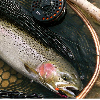
Montana Fish, Wildlife & Parks completed spring sampling providing trout abundance estimates for southwestern Montana rivers. Results show population increases in many areas, with collaborative research from FWP and MSU continuing to identify limiting factors affecting trout populations in the Big Hole, Beaverhead, and Ruby rivers.
FISHERIES
Idaho Fish and Game closed sport fishery for Chinook salmon in the Little Salmon River on June 8 after harvest objectives were met. The Lochsa River remains the only open Chinook fishery, while the South Fork Salmon River and Upper Salmon River will open June 18.
The Utah Division of Wildlife Resources will host a free public viewing event on June 27 at the San Rafael Swinging Bridge to observe three native fish species: bluehead sucker, flannelmouth sucker, and roundtail chub. Biologists will explain species identification, adaptation to desert environments, and conservation restoration efforts.
The Idaho Department of Fish and Game is studying the rapidly expanding walleye population in the lower Snake River through a new tagging study. Anglers are encouraged to report tagged walleye and harvest all caught fish to protect juvenile salmon and steelhead from predation by this invasive species.
Fish, Wildlife & Parks and Walleyes Unlimited of Montana encourage anglers to keep smaller walleye on Canyon Ferry Reservoir to reduce competition and allow larger fish to grow. Current regulations allow 10 fish daily with only 1 over 15 inches to maintain a balanced, self-sustaining walleye population.
The Georgia Department of Natural Resources' Coastal Resources Division announced that Georgia's commercial and recreational food shrimp season will open in state territorial waters at 8 a.m. Tuesday, June 9, 2026. Shrimp trawlers must employ certified turtle excluder devices and bycatch reduction devices, with Estelle Beach in Chatham County remaining closed to commercial trawling.
The Arkansas Game and Fish Commission returned 18 donated largemouth bass to Arkansas lakes in May, completing the inaugural year of the Legacy Lunker Program. The fish were spawned with Titan Maxx Florida bass from Red Hills Fishery in Georgia at Joe Hogan State Fish Hatchery to develop trophy bass genetics. An end-of-year banquet on October 29 will celebrate participating anglers and feature a drawing for a 21-foot Xpress Boat.
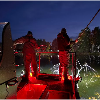
The Michigan Department of Natural Resources and Michigan State University fish pathologists will investigate emaciated siscowet lake trout in Lake Superior's deepest waters aboard the RV Lake Char. These "zombie" fish, characterized by thin and undernourished bodies, have increased from 3% in 2015 to 20% in 2024-2025, with researchers exploring whether a pathogen or food scarcity is responsible.
The Gulf Council met in Tampa, Florida, June 1-3, 2026, awarding Officer Specialists Kyle Yurewitch and Mathew Rubenstein of the Florida Fish and Wildlife Conservation Commission the 2025 Law Enforcement Team of the Year Award. The Council took final action on Reef Fish Amendment 63 for red grouper quota distribution and discussed regional management of greater amberjack, for-hire data collection, and essential fish habitat updates.
The Lake St. Clair Fish Cleaning Foundation is raising $90,000 for a public fish cleaning station at Clinton River Cutoff DNR Boating Access Site in Harrison Township. Donations through July 31 will be matched through a grant program. The station will feature a Barracuda 1 premium fish cleaning station and meet ADA guidelines.
Michigan Department of Natural Resources conservation officers reported multiple violations of walleye possession limits on the Detroit River during spring patrols. The legal daily limit is six walleye per angler, and DNR 1st Lt. Damon Owens emphasized enforcement efforts to protect the fishery resource from depletion.
Nebraska Game and Parks Commission biologists captured a 70-pound lake sturgeon at Gavins Point Dam that had traveled 681 miles upstream from the Osage River, where it was originally tagged by the Missouri Department of Conservation in 2017. The threatened species, rarely encountered in Nebraska, represents a significant finding in ongoing sturgeon monitoring efforts.
The USGS, Montana State University, NOAA-NIDIS, and Montana Fish, Wildlife & Parks launched TroutCast, an interactive web tool providing seasonal and long-term drought forecasts for trout populations across Montana's rivers. The tool integrates monitoring data and streamflow records to support fisheries management and recreational angling opportunities.
The Gulf Council approved Reef Fish Amendment 63 to establish a 3-year commercial quota pool for red grouper participants in the Grouper/Tilefish Individual Fishing Quota program. Beginning in 2027, if the commercial annual catch target exceeds 4,280,000 pounds, 50% of the quota increase will be distributed to active red grouper fishermen based on landings.
Chinook salmon fishing closures and modifications take effect June 3 in Idaho across four river sections including the Clearwater River, Snake River below Hells Canyon Dam, lower Salmon River, and Little Salmon River due to harvest objectives being reached.
The Vermont Fish and Wildlife Department urges anglers and the public to avoid disturbing spawning sea lamprey in the Connecticut River and tributaries. Sea lamprey are native to the basin, play a vital ecosystem role, and are a Species of Greatest Conservation Need in Vermont and New Hampshire. The department has improved fish passage facilities, with over 17,000 sea lamprey passing Holyoke Dam and 4,000 passing Vernon Dam in 2025.
Montana Fish, Wildlife & Parks will host a virtual townhall today, June 4, at noon to discuss summer fishery concerns and management tools. FWP Fish Chief Adam Strainer and fisheries staff will address low snowpack conditions and anticipated hot, dry weather impacts on state fisheries.
NOAA Fisheries announced a 43-day recreational fishing season for greater amberjack in Gulf federal waters from September 1 to October 14, 2026, up from 26 days in 2025. The season closure protects the overfished population, with a bag limit of 1 fish per person per day and 34-inch minimum fork length.
Georgia's Department of Natural Resources announced that recreational and commercial oyster harvesting will close June 1, 2026, and reopen October 1, 2026, to comply with the National Shellfish Sanitation Program's Vibrio parahaemolyticus control plan protecting public health.
Idaho Fish and Game closed Chinook salmon fishing on the Lower Salmon River from Rice Creek Bridge upstream to Upper Twin Bridge on May 26 after reaching the sport fishing harvest objective for this section.