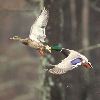
Pennsylvania's Game Commission has established 2026-27 migratory game bird seasons selected from U.S. Fish and Wildlife Service frameworks. Significant changes include increased Canada goose seasons in the Atlantic Population Zone and shifted light goose season dates. Hunters are encouraged to report banded birds at www.reportband.gov to support population management efforts.
Hunting
The Montana Fish & Wildlife Commission closed Black Bear Management Units 300, 301, 319, and 580 to all black bear hunting effective June 3, 2026, after these districts exceeded 37% female bears in the harvest.
Utah's Division of Wildlife Resources opens applications June 9 for 2026 antlerless hunts including deer, elk, moose, pronghorn, and bighorn sheep. The application period closes June 23, with drawing results available by July 8. Antlerless permits help manage wildlife populations and provide locally sourced meat for hunters.
Ohio's wild turkey hunters harvested 15,887 birds during the spring 2026 season, according to the Ohio Department of Natural Resources Division of Wildlife. The Ohio State University collaborated with the Division of Wildlife on research studying hen turkey nesting and survival, as well as male turkey gobbling patterns to inform future management decisions.
The Arkansas Game and Fish Commission has opened applications for permit-only white-tailed deer hunts on wildlife management areas through July 1. Hunters can apply online at www.agfc.com for youth, archery, alternative firearms, and modern gun hunts, with a $5 nonrefundable processing fee per application.
The application deadline for the 2026 deer gun season in North Dakota is June 3. Applicants for regular deer gun, gratis, youth, and muzzleloader permits can apply online through the North Dakota Game and Fish Department's website at gf.nd.gov.
The Arizona Game and Fish Department reminds hunters that applications for 2026 fall hunt permit-tags for deer, turkey, javelina, bighorn sheep, bison, and sandhill crane are due by Tuesday, June 2 at 11:59 p.m. Applicants must have a valid hunting license and their Customer ID ready when applying at draw.azgfd.com.
By order of the Montana Fish & Wildlife Commission, Black Bear Management Unit 440 is closed to all black bear hunting effective one-half hour after sunset on Monday, June 1, 2026.
The Nebraska Game and Parks Commission's Open Fields and Waters Program offers annual per-acre payments to landowners allowing public hunting and fishing access on private lands. Since 2016, over 235,000 acres have been enrolled with more than 940 participating landowners providing access across 471,000+ acres, ponds, and stream miles.
Montana Fish, Wildlife & Parks partnered with the National Wild Turkey Federation and private landowners in the Flathead Valley to host Montana's first mentored youth turkey hunt. Five young hunters ages 10-15 participated in the inaugural event in May, with three successfully harvesting four turkeys while learning essential hunting skills and bear safety from NWTF volunteers.
Montana Fish, Wildlife & Parks reminds hunters that the application deadline for swan, sandhill crane, elk B, deer B, antelope, and antelope 399 and 900 series is Monday, June 1. Applications must be completed online, at a License Ambassador location, or at an FWP office. FWP provides instructional videos and the MyFWP mobile app to assist hunters.
Montana Fish, Wildlife & Parks Director Christy Clark has requested the Private Land/Public Wildlife committee prioritize corner crossing solutions at its June 1-2 meeting in Glasgow. The PLPW advisory committee will develop recommendations to increase landowner participation in FWP access programs.
Idaho hunters can apply for fall 2026 controlled hunts for deer, elk, pronghorn, swan, black bear, and turkey from May 1 through June 5 via GoOutdoorsIdaho.com, license vendors, Fish and Game offices, or by phone. The first Super Hunt drawing closes May 31, offering additional tag opportunities across multiple species.
The Nebraska Game and Parks Commission is accepting draw permit applications June 1-12 for deer, antelope, and elk across multiple management units. Residents and nonresidents can apply online at OutdoorNebraska.gov or in person, with draw results available by June 19.
A hunter shot and killed a male grizzly bear in defense of life after it charged him and his young son near Cave Falls Road on the Caribou-Targhee National Forest outside Ashton on May 16. Idaho Fish and Game investigated and determined the hunter acted appropriately. The agency reminds hunters that grizzly bears may be encountered in the Greater Yellowstone area and parts of northern Idaho.
Ohio hunters checked 15,763 wild turkeys during the spring 2026 season through May 24, according to the Ohio Department of Natural Resources Division of Wildlife. The statewide total includes 30 days of hunting in the south zone's 83 counties and 23 days in the northeast zone. Ashtabula County led with 455 birds checked.
Conservation First USA's Big Game Super Draw offers hunters 17 special permit-tags for Arizona species including elk, pronghorn, bighorn sheep, bison, Coues' whitetail, mule deer, and turkey. Tickets are $10 each with a June 30 deadline, and 100 percent of proceeds benefit the Arizona Game and Fish Department's wildlife and habitat projects.
Vermont Fish and Wildlife's antlerless deer permit applications are now available online and through license agents. The Fish and Wildlife Board set permit numbers for fall deer hunting seasons, with applications due July 22 and lottery drawings on August 19. Permits are available for 19 of Vermont's 21 Wildlife Management Units.
The Montana Fish & Wildlife Commission has closed Black Bear Management Unit 700 without hounds to all black bear hunting effective one-half hour after sunset on Saturday, May 23, 2026.
North Dakota's 2025 upland bird harvests declined for pheasant, sharp-tailed grouse, and gray partridge compared to 2024. RJ Gross, North Dakota Game and Fish Department upland game biologist, attributed decreases to cool, wet nesting conditions and West Nile virus impacts on sharptails, though adult pheasant densities remain high.