
The Florida Keys in the 70’s and 80’s were a special place in many ways, still on the verge of being discovered by much of the outside world, still reasonably affordable and still absolutely stiff with monster gamefish, most of which had never seen a hook.
It was also a time when the first elements of modern fishing tackle were being developed—a lot of it right there in the Keys and in Miami, where a cadre of very serious light-tackle anglers grew through local fishing clubs and fishing tournaments like the Miami MET.
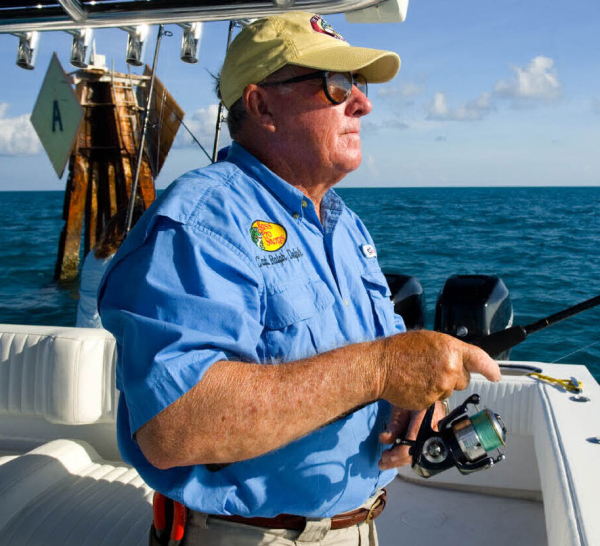
Captain Ralph Delph was among the crop of famous anglers that rode the crest of the unbelievable fishing there, and was perhaps the king of the booming light tackle record fishing program developed by the International Game Fish Association (IGFA).
Master Angler: The Ralph Delph Story, written by Delph’s friend and long-time fishing companion Forrest Young, tells the story of Delph’s amazing angling career, including his 293 IGFA records, a mark which likely never will be matched now that our fisheries are so much more heavily impacted by harvest and water quality issues and fish growing to record sizes have become more scarce for many species.
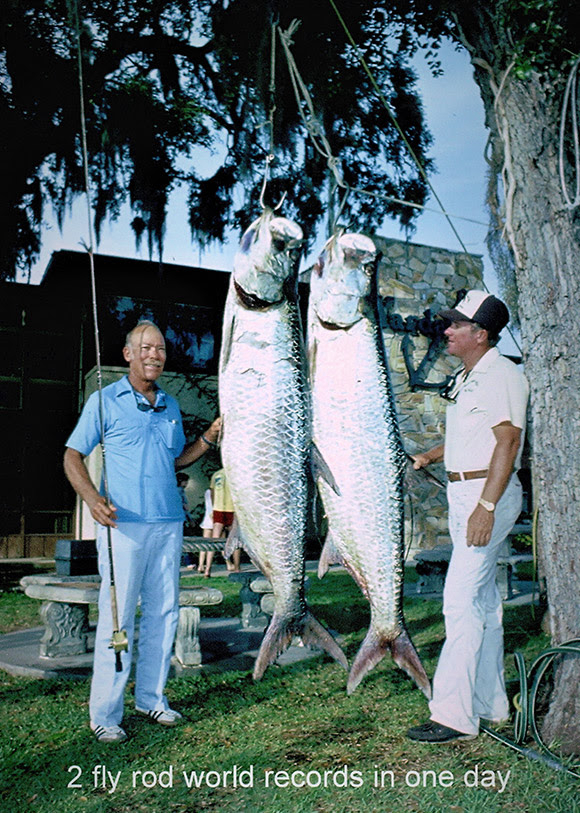
Among Delph’s amazing accomplishments were guiding famed fly-rodder Stu Apte to two fly-rod world record tarpon in one day off Homosassa. He also personally set many fly-rod and conventional records, sometimes with unbelievable catches including a 319-pound Goliath grouper on 15-pound-test baitcasting gear.
While cognoscenti of Florida gamefish angling are well aware of Delph’s many records, less known are his contributions to development of much of the gear that so many serious anglers rely on today, including extensive use of sonar in locating and identifying reef fish as well as baitfish. (Ralph’s early fishing was in the rotating-flasher and paper-scratcher period, but he made the most of these rudimentary electronics when most other recreational anglers were not using them in saltwater.)
He was a hard-core angler who frequently ran over 100 miles in a day out of Key West in pursuit of the best fishing he could possibly give his clients—always with a single-outboard boat in the day when many of the two-stroke outboards were not all that reliable. He was an up-at-dawn and back-at-dark sort of angler, ready to take on any fish, no matter how big or tough—but he had to have his breakfast eggs just so, according to Young.
If they were overcooked, no matter how fancy the restaurant, Ralph would get up from the table and threaten to go back to the kitchen and cook his own—Young writes that many of Delph’s friends and clients avoided eating breakfast with him because of this idiosyncrasy.
Delph loved trout fishing as much as he loved chasing saltwater giants, and spent every summer at a second home southwest of Bozeman, Montana.
He was one of the first recreational guides to use massive amounts of live chum to lure fish into range for his clients, a technique that’s now almost universal throughout Florida’s coastal waters both inshore and off. He was also one of the first small-boaters to extensively use radar as a means of dealing with the frequently tricky weather off the Keys.
Unfortunately, the radar of the time put out a lot of radiation that could not be avoided because of the low mounting position on Delph’s center console, and may have contributed to the cancer that eventually killed him. He died in 2016 at the age of 75 at his summer home near Bozeman, Montana.
Ralph was dedicated to his family, particularly his sons.
“I had a tendency to get in trouble with my wife for taking the boys out of school to go fishing, but I’ve never known a person who later on in life said they wished they spent less time with their kids,” he was noted for saying repeatedly. It apparently took—son Billy is a well-known charter captain, and three grandsons are also learning the business.
Forrest Young, author of the book, is not only a great angler in his own right but also a marine biologist and founder of Florida Keys Aquarium Encounters in Marathon, Florida.
It’s $49.95 from Wild River Press, www.wildriverpress.com.
— Frank Sargeant
frankmako1@gmail.com