
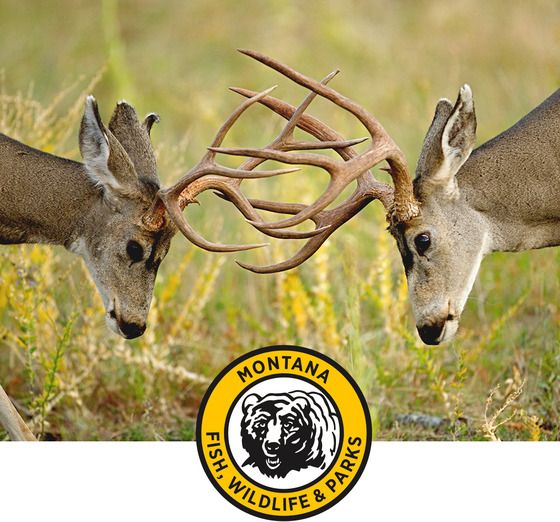
HELENA – While an early spring across the state made the work of FWP wildlife staff more challenging, it also may have helped mule deer populations -- including fawn recruitment. That was the case when biologists were conducting their spring mule deer surveys.
"Overall, the mule deer population is on the upswing, and we are cautiously optimistic," said Brian Wakeling, FWP's game management bureau chief. "Just because it is trending upwards, though, doesn't mean that the trend will necessarily continue. In most places, we are still below long-term averages, and our objective remains to increase mule deer numbers."
Mule deer surveys occur post-hunting season, usually in December and January, and again in the spring to estimate winter survival. They are just one way FWP responds to the concerns of hunters about herd health.
"When we have an open winter, mule deer herds are not restricted to smaller areas of winter range and can begin exploring wider ranges earlier in the spring," said Wakeling said. "Because they are not concentrated as much, they can be more difficult to find the numbers we are used to when classifying and enumerating individuals."
Spring surveys have two primary goals: to count the total number of deer in a trend area to compare with long-term averages, and to track fawn-to-adult ratios to determine winter fawn survival. Fawns that survive their first winter are considered recruited into the population. Biologists record the number of fawns per 100 adults to generate recruitment ratios. These ratios can help inform FWP on overall winter survival, how the population is faring as it enters the summer season, and what the potential for growth might be in the upcoming year.
According to Wakeling, the spring survey showed favorable fawn recruitment overall, but there are still places in the state where recruitment and populations have not yet responded positively.
"The recent rains and favorable range conditions increased nutrition and body condition for mule deer this year and will play an important role in ensuring good overwinter survival next year, regardless of winter severity," Wakeling said.
In north-central and south-central Montana, biologists reported above-average fawn recruitment but still lower-than-average population trends.
"Several years of poor conditions got us to this point, and it will take a few consecutive good years to see significant recovery," said Cory Loecker, Region 4 wildlife manager. "But we couldn't ask for better weather than what we've gotten so far this year."
In northeastern and southeastern Montana, surveys generally indicated strong recruitment and an increase in populations.
"The past few years we have received favorable moisture during key periods, which improved habitat and forage across southeastern Montana and has helped out the mule deer as they have been recovering from multiple years of severe drought," said Brett Dorak, Region 7 wildlife manager.
And in western and southwestern areas of the state, biologist reported that warm winter weather likely helped mule deer winter survival and fawn recruitment in many areas.
We invite the public to review the regional links below to learn more:
Region 4 - north-central Montana
Region 5 - south-central Montana
*Region 1 – northwest Montana: Because thick canopy cover in this area makes it tough to collect data by air, Region 1 does not put out spring survey information. The area relies more heavily on harvest data.